One desktop.
One way to do things.
The Adelon Operating System is for people who want a computer that just works, for games, for work, for anything, without ever opening a terminal.
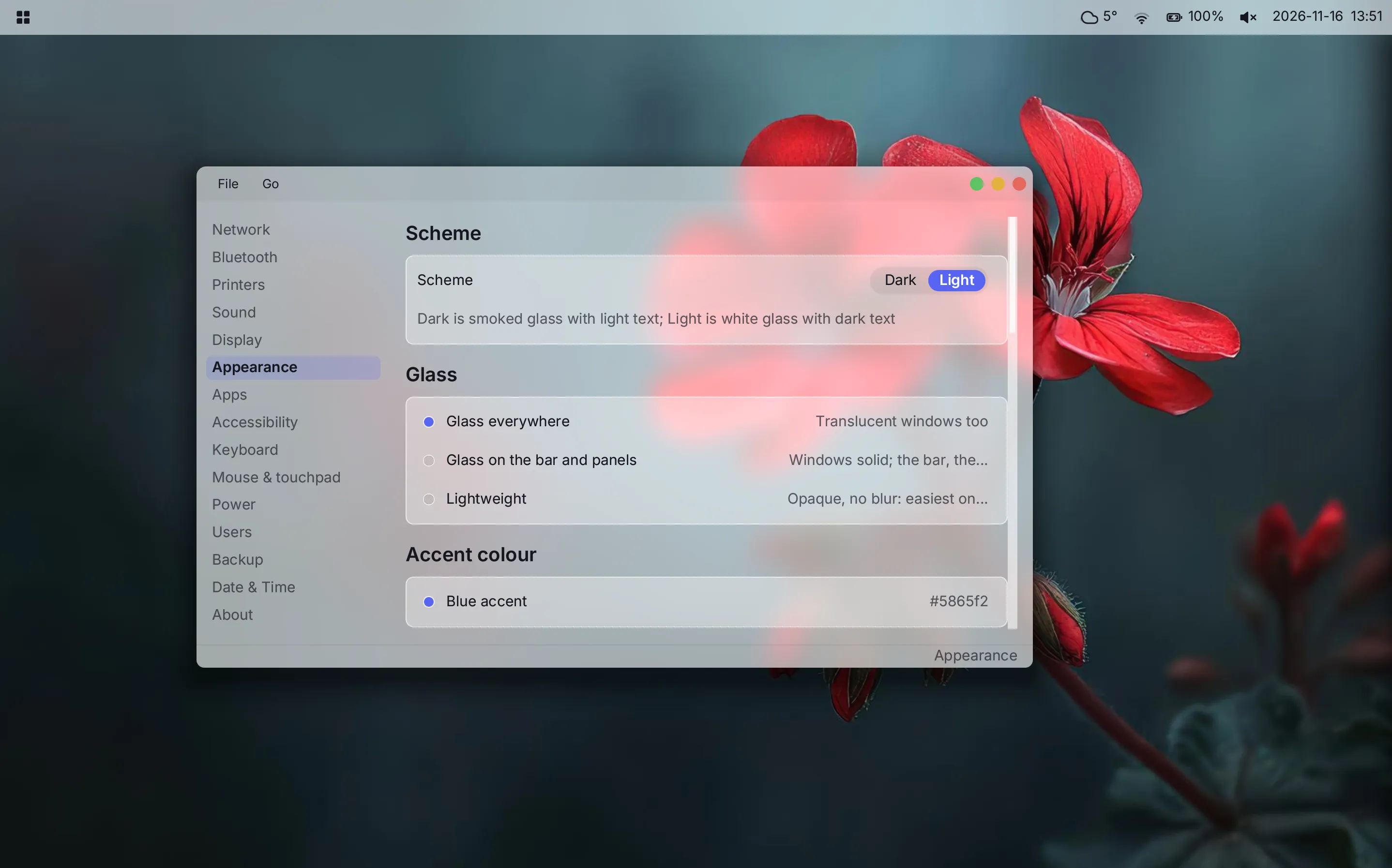
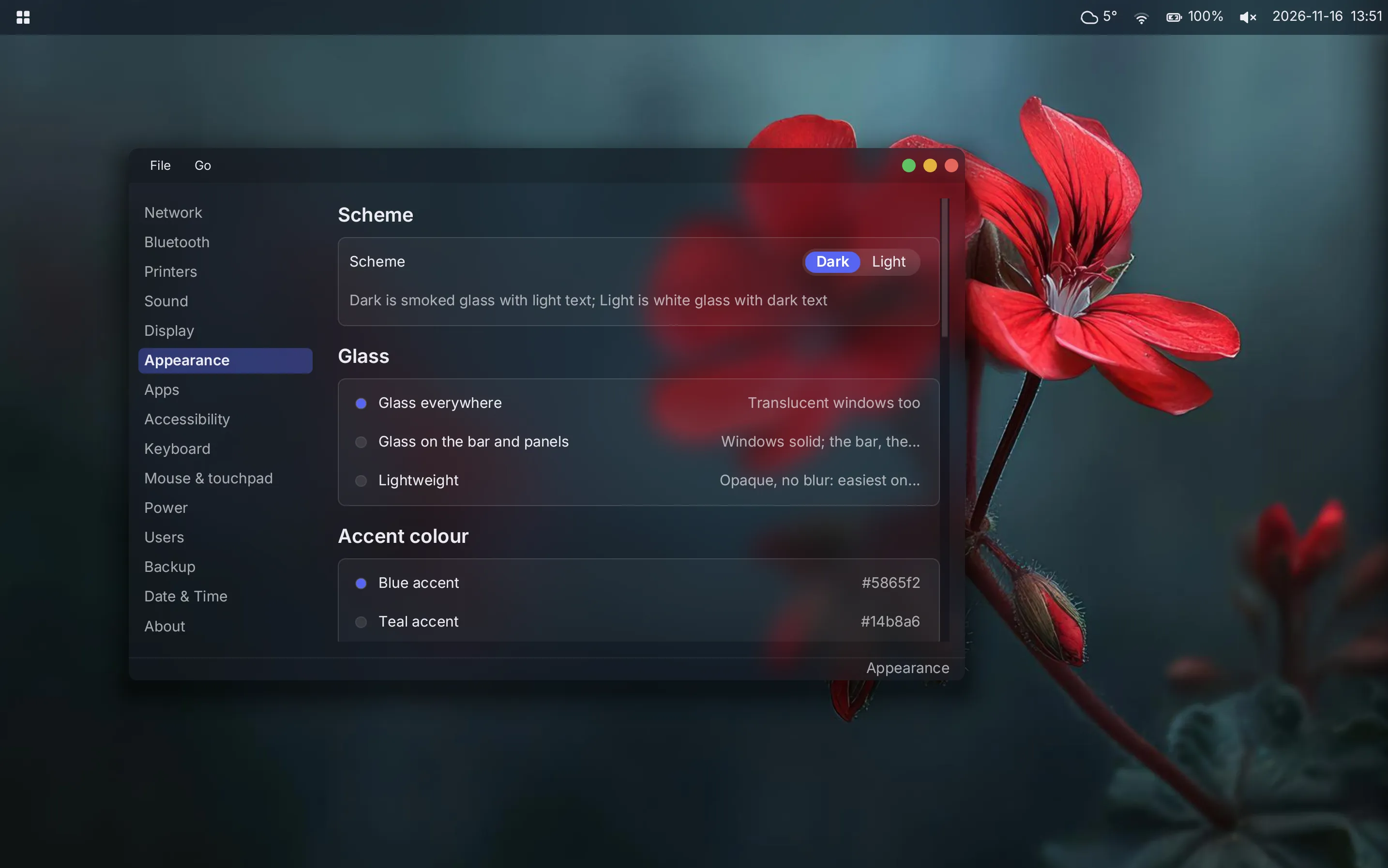
Privacy
A computer that answers to you.
Not to an advertiser, not to a cloud account, not to us. These are written into AOS's policies and enforced in its code, not settings you have to go looking for.
- Nothing about you leaves
- No telemetry, no usage data, no crash reports. AOS only asks for updates and the time, and neither request says anything about you.
- No account, anywhere
- No sign-in with any company, not with us either. And it answers nothing on the network that it didn't ask for.
- Nothing to sell you
- No ads in the menus, no cloud upsell, no assistant you didn't ask for.
- Your keys, your data
- Every home folder is encrypted with its owner's password. The recovery key is shown once and stored nowhere else.
- Updates when you say so
- Offered, never forced. No surprise restart in the middle of a meeting, and every update can be undone.
- Made in Sweden, under EU law
- Built under Swedish law and the GDPR. The privacy policy lists every request that can leave the machine.
Updates that undo themselves.
AOS keeps two copies of the system. An update goes to the other one and starts on trial; if it doesn't reach the desktop, the machine falls back by itself. Software updates the whole system in one step, when you choose. Install once, never reinstall.
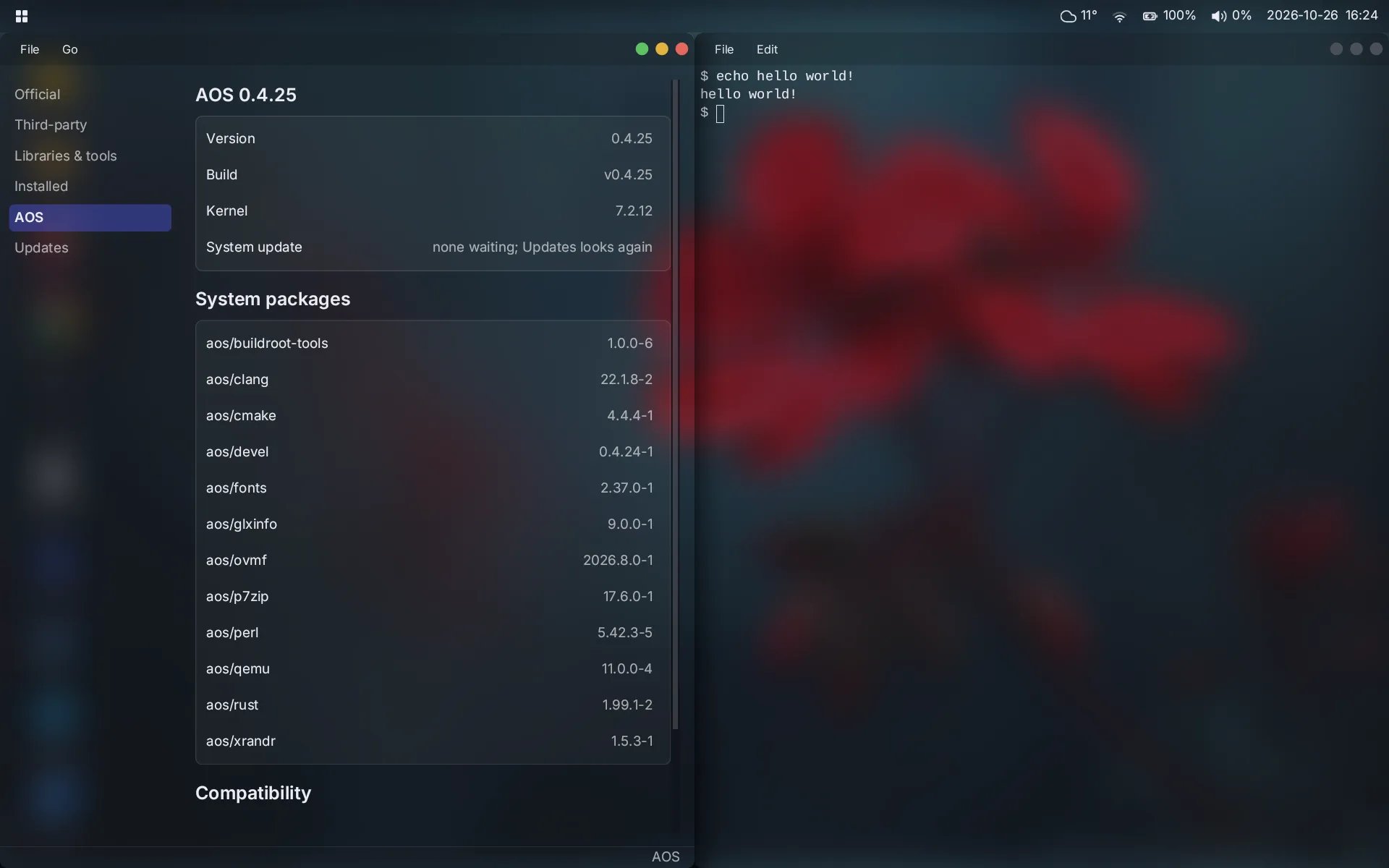
The software you expect.
Firefox, Chrome, Steam, VS Code, LibreOffice, GIMP, Telegram and more, one click away in Software and clearly marked as third-party. Setting up takes minutes: keyboard, time zone, your account, done.
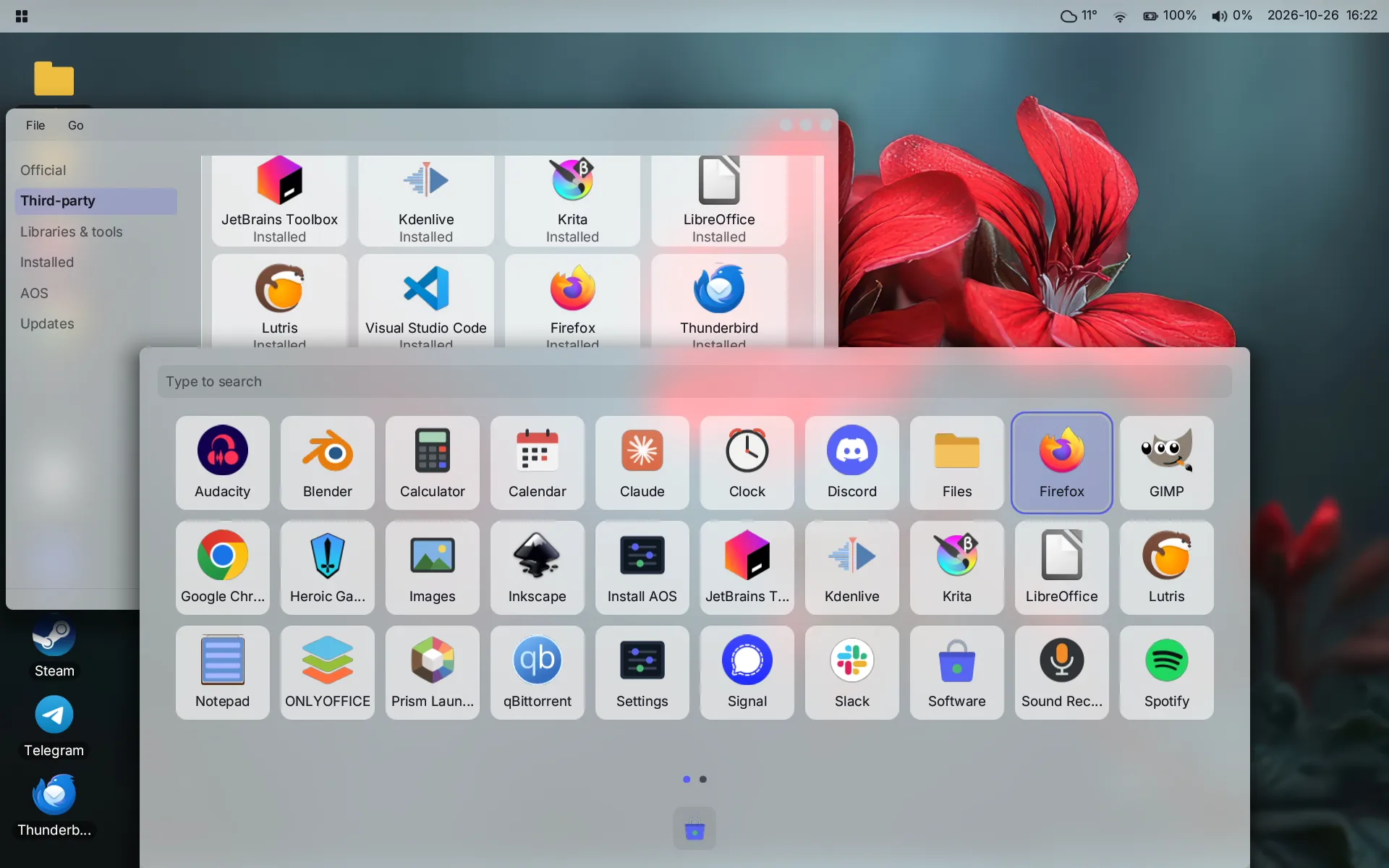
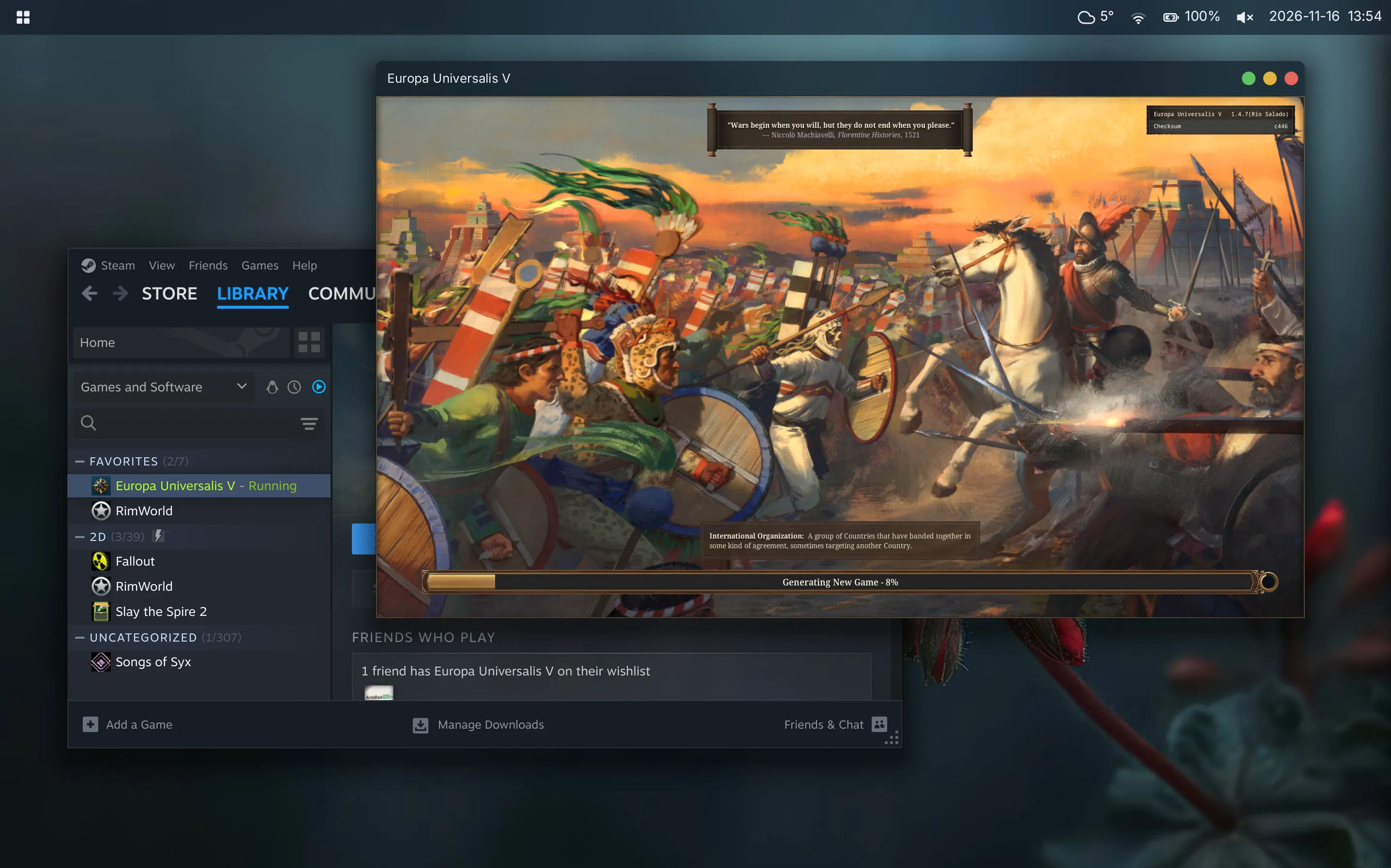
Games on the right GPU.
Steam and its games run on the discrete NVIDIA GPU, with variable refresh while a game is fullscreen. X11 games work too.
Built so it can't fall apart.
Most systems offer several desktops, several package formats and several ways to configure the same thing. AOS offers one. That's what makes "install it and it works" possible.
- Encrypted by default
- Every account's home folder is its own encrypted vault. The whole disk can be encrypted too, and the TPM unlocks it where there is one.
- Secure from the first boot
- Secure Boot with a signed kernel for each system slot, a read-only core verified as it's read, and a CVE report with every release.
- Apps in their own sandbox
- Third-party programs get a private home. They see your folders, the camera and the microphone only when you allow it.
- A desktop of its own
- Compositor, shell, toolkit, settings, store, installer and the everyday apps, written from scratch in Rust to feel like one thing.
- Every display its own
- Its own scale, refresh rate, bar and dock. Ctrl+Super+arrows sends a window across.
- Uninstall means gone
- Every app keeps its data in one folder of its own. Remove the app and its folder, and nothing is left behind.
For developers
Made to be developed on.
The system stays sealed, your tools arrive as packages, and your code lives in ~/Projects. Nothing you install or build can make the machine harder to keep running.
- Toolchains in one click
- Rust, C and C++, Clang, Go, Node.js, Java, .NET, the Android SDK, lldb, podman. From Software, without sudo or dotfolders all over your home.
- Agents in a workspace
- Editors run their terminal, language server and AI agent in a workspace that sees and changes only your project.
- From folder to app in one command
- apm init, then apm publish --test --run: built, signed, sandboxed and in the launcher, exactly as your users will get it.
- Your own repository
- Sign your packages, put them on any HTTPS server, and people add it in Software. Your updates arrive with everything else.
An honest alpha.
The foundations are done and have survived dozens of releases. A few things are still on the way:
- Installing takes the whole disk. No dual boot yet.
- The first start with Secure Boot asks you to enrol the AOS key once.
- English and Swedish only.